Why Visiting Crews Should Hire a Local Drone Operator in Kenya
Bringing a drone to film in Kenya? See what the 2025 drone regulations require of visiting crews, and why a licensed local drone operator in Kenya saves time.
Most international crews coming to film in Kenya pack a drone. It is small, it fits in the camera case, and aerial shots of the Rift Valley or a Turkana landscape do a lot of work in a finished film. The flying is rarely the problem. The problem is everything that has to happen before the drone is allowed to leave the case, and in Kenya that list is longer, and slower, than many productions expect.
This guide explains what the current rules ask of a visiting crew that wants to fly its own drone, where the real delays sit, and why hiring a licensed local drone operator in Kenya is usually the quicker and safer route for a shoot of a few days or weeks.
The rules were updated in 2026
Drone operations in Kenya are governed by the Civil Aviation (Unmanned Aircraft Systems) Regulations, 2025, published as Legal Notice 40 of 2026 in the Kenya Gazette on 6 March 2026. They update the 2020 rules that a great deal of online advice, including some recent travel articles, still quotes. If a guide you are relying on cites the 2020 Regulations, check it against the current text or with the Kenya Civil Aviation Authority (KCAA) before you plan around it. Our summary of what changed in Kenya’s drone regulations sets out the differences.
The Regulations sort operations into three categories by risk: Category A (open), Category B (specific) and Category C (certified). Commercial filming for a client, an NGO or a broadcaster is work done for reward or hire, and that brings in most of the requirements below.
What a visiting crew would need to fly its own drone
On our reading of the 2025 Regulations, a foreign production planning to fly its own aircraft would need to work through the following.
- An import permit. No one may import or export an unmanned aircraft system without a permit from KCAA. Drones brought in without the right paperwork can be held at the airport, and press coverage of drones piling up in customs stores at JKIA is a reminder that this is not a theoretical risk.
- Authorisation to operate a foreign-registered drone. The Regulations state plainly that a foreign-registered aircraft may not be operated in Kenya without authorisation from KCAA. Aircraft must also be registered and carry their identification.
- An RPAS Operator Certificate (ROC). Anyone operating a drone for commercial activities, reward or hire must hold a ROC. Applications must be made at least 90 days before the intended operation, and the applicant needs security clearance from the ministry responsible for defence.
- A licensed remote pilot. For Category B and C operations, the pilot in command must hold a remote pilot licence issued or rendered valid by KCAA. We could find no simple route in the Regulations for a foreign pilot’s licence to be accepted as it stands, so confirm the position with KCAA directly if you are counting on one.
- Third-party insurance. Operators must carry third-party liability cover, with the certificate available on request, although KCAA can waive this for some categories.
There is one opening for established foreign operators. KCAA may recognise a ROC issued by another state if the standards behind it are at least equal to Kenya’s, and a recognised foreign operator remains subject to KCAA oversight while working here. It is worth asking about if your company already holds a certificate at home, but it is a discretionary decision, not an automatic right, and you should not schedule a shoot around it until you have the answer in writing.
For a two-week production, the 90-day ROC lead time on its own usually settles the matter, before visas, filming licences and location permissions are even counted. Our guide to KCAA drone licences, the RPL and the ROC goes through the licensing side in more detail.
Where you fly matters as much as who flies
Holding the right certificates does not mean a drone can go up anywhere. The Regulations add a layer of site-specific limits that catch out visiting crews.
- Airports and airstrips. Flying within seven or ten kilometres of an aerodrome, depending on its category, needs written permission from the aerodrome operator and the air navigation service provider, plus KCAA approval. Many safari locations sit close to busy airstrips.
- Restricted and sensitive areas. Prohibited, restricted and danger areas published in Kenya’s aeronautical information, and sites such as strategic installations, prisons, police stations, courts, schools and hospitals, are off limits without permission.
- Distance from people and animals. Without specific authorisation, a drone must keep at least 30 metres from any person, vehicle, building or animal not involved in the operation. The Regulations also set a 400-foot ceiling above ground level unless KCAA approves otherwise, and night flights and flights beyond visual line of sight need express approval.
- Consent. An imaging device may not be used on a person without that person’s written consent. For NGO and documentary work in communities, that sits naturally alongside the consent process you should already have.
National parks and reserves
Filming in Kenya’s national parks needs separate permission from the Kenya Wildlife Service, applied for online, and crews should wait for written approval before filming. KWS permission does not replace aviation approval: it sits on top of it, and KWS itself asks for the pilot’s licence, the operator certificate, the drone’s registration and proof of insurance. A standard park entry ticket does not cover drone filming. Private and community conservancies set their own conditions, so ask early. Our guide to filming in Kenya’s national parks covers the KWS side, and our overview of filming permits in Kenya covers the wider set of permissions a production needs.
What a local drone operator brings
Hiring a licensed operator based in Kenya removes most of the paperwork above from your critical path, because the certificates, licences, registrations and insurance are already in place. Beyond that, a good local operator adds value in ways that are easy to underestimate from abroad.
- Knowing the process. Site-specific approvals, aerodrome permissions and park conditions are routine work for an operator who deals with them regularly. They know what to ask for, from whom, and how far ahead.
- No excess baggage, no customs risk. The aircraft, batteries and spares are already in the country. You avoid the cost of carrying lithium batteries through airports and the risk of a drone being held on arrival.
- Local conditions. Afternoon winds on the plains, dust, heat and high-altitude locations all affect flight time and image quality. Someone who flies here regularly plans shots around them.
- Wildlife judgement. Knowing when an animal is becoming stressed, and when to bring the aircraft back, protects the animals, your permit and your production’s reputation.
- Community relations. A drone over a village or farm can cause real concern. A pilot who can explain what is happening in Kiswahili or the local language, and who respects the consent process, makes the day run more smoothly.
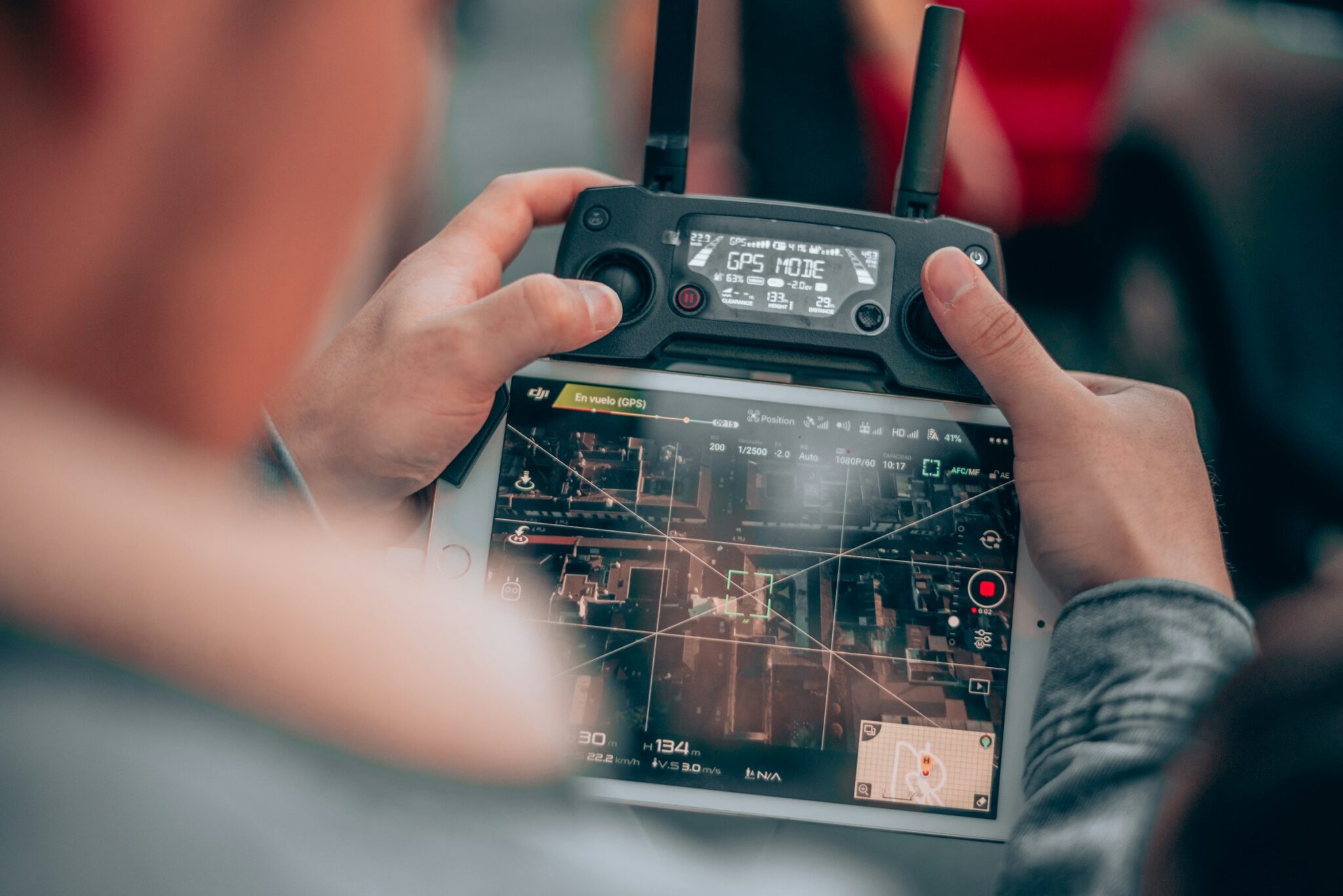
The creative side need not suffer. Your director or director of photography can share a shot list and storyboards in advance, watch the live feed on a monitor, and direct each move while the local pilot flies, leaving your own camera team free to concentrate on the ground.
Questions to ask before you hire
Not every person with a drone is licensed to fly it commercially. Before you book anyone, ask for:
- the company’s ROC number, which you can check against the list of certificate holders KCAA publishes on its website;
- the pilot’s remote pilot licence, and confirmation that it covers the category of operation you need;
- the aircraft’s registration certificate and a current third-party insurance certificate;
- a clear answer on who will secure site approvals, aerodrome permissions and any KWS or conservancy authorisation, and how long each is likely to take;
- details of the aircraft and camera, spare batteries and a backup aircraft, and the delivery formats and codecs you need;
- a reel of recent aerial work, ideally in settings similar to yours.
A professional operator will be glad to answer all of these. Hesitation over any of them is a reason to keep looking.
How we work with visiting crews
Afrovo Studios holds a KCAA RPAS Operator Certificate and our drone pilots are licensed. We fly for documentary, NGO, conservation and corporate productions across Kenya, either as a self-contained aerial unit or as part of a full local crew. You can see more of how we approach aerial work on our drone videography in Kenya page. Whoever you hire, our advice is the same: start the conversation early, ask to see the paperwork, and confirm anything you are unsure of with KCAA before you travel.
Frequently asked questions
Can a foreign film crew fly its own drone in Kenya?
It is possible, but rarely practical for a short shoot. The 2025 Regulations require an import permit, KCAA authorisation to operate a foreign-registered drone, an RPAS Operator Certificate for commercial work (applied for at least 90 days ahead, with defence security clearance), a pilot licensed or validated by KCAA, and insurance. KCAA may recognise a foreign operator certificate, but that is at its discretion.
Do I need a permit to bring a drone into Kenya?
Yes. The Civil Aviation (Unmanned Aircraft Systems) Regulations, 2025 state that no one may import or export a drone without a permit from the Kenya Civil Aviation Authority. Arrange this before you travel, as drones arriving without paperwork can be held at the airport.
Can you fly a drone in Kenya’s national parks?
Only with written permission from the Kenya Wildlife Service on top of the aviation approvals. KWS asks for the pilot’s licence, the operator certificate, the drone’s registration and insurance, and a park entry ticket does not include drone filming.
How do I check that a drone operator in Kenya is licensed?
Ask for the company’s RPAS Operator Certificate number and check it against the list KCAA publishes on its website. Also ask to see the pilot’s remote pilot licence, the aircraft’s registration certificate and a current insurance certificate.
Afrovo Studios is a Nairobi-based video production company working across East Africa, making documentaries, campaign films and corporate video for NGOs, conservation organisations and brands. Get in touch to talk about your next project.