Kenya’s New Drone Regulations 2026: What Changed
Kenya's new drone rules were gazetted in March 2026. What changed for filming: 30 m distances, two-year ROCs, security clearance and foreign operators.
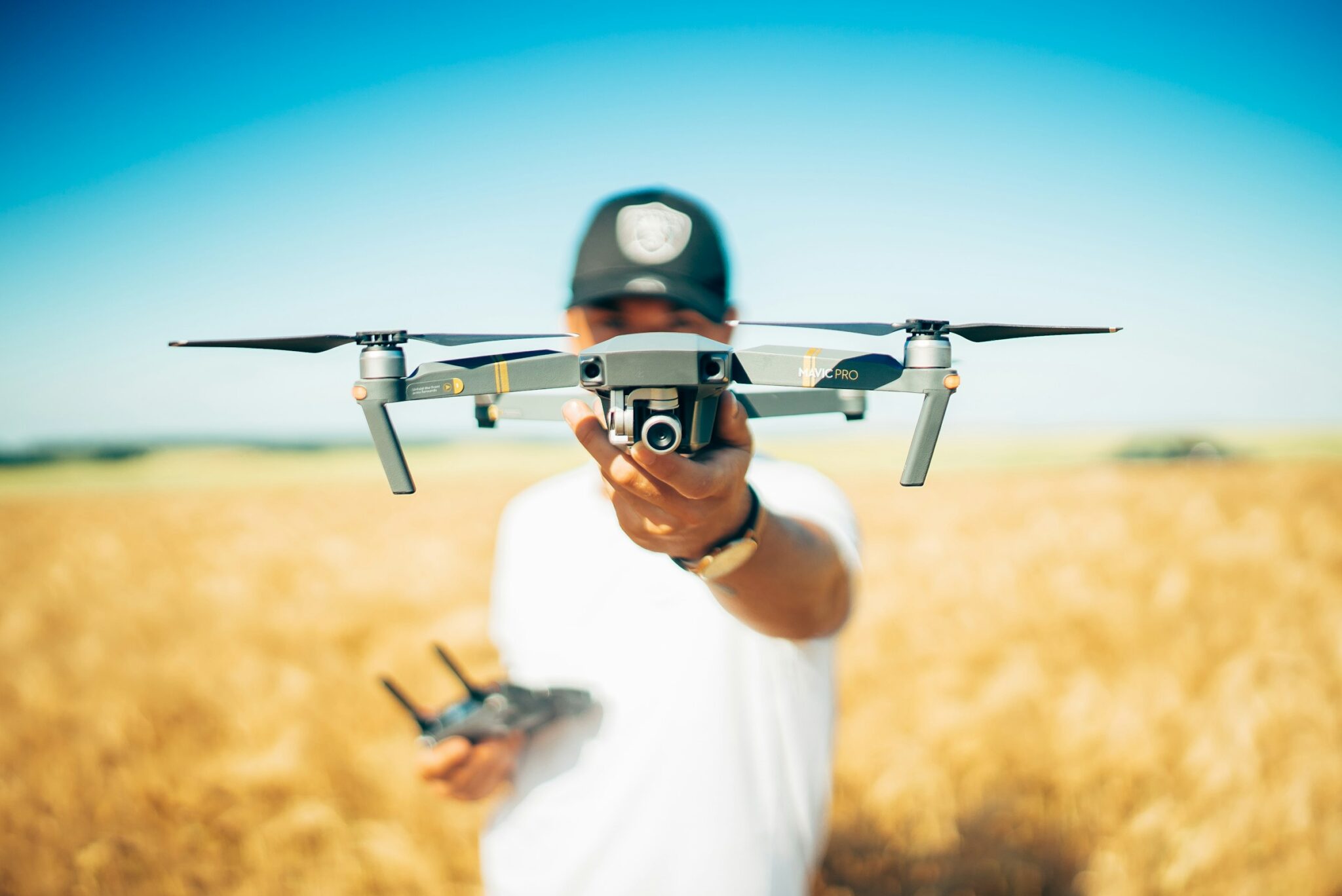
Kenya’s drone rulebook has been rewritten. The Civil Aviation (Unmanned Aircraft Systems) Regulations, 2025 were published as Legal Notice No. 40 of 2026 in the Kenya Gazette supplement of 6 March 2026, as part of a wider set of revised civil aviation regulations the Kenya Civil Aviation Authority (KCAA) has been rolling out this year. They take over from the framework Kenya introduced in April 2020, which for six years has governed every aerial shot of the Rift Valley, the Mara and the Nairobi skyline.
If you commission aerial filming in Kenya, most of what you knew still holds, but a handful of changes matter, particularly for crews coming in from abroad. This post compares the new regulations with the 2020 rules point by point, and flags where you should still check with KCAA before you fly.
Where the new rules come from
The 2025 Regulations are made under section 82 of the Civil Aviation Act. According to the Explanatory Memorandum, they update the 2020 framework to keep pace with drone technology, growing commercial demand and international standards, and to bring Kenya closer to International Civil Aviation Organization guidance. Stakeholders were consulted in Nairobi in June 2024, and the memorandum says the rules will be reviewed after three years.
One practical note before the detail: at the time of writing, KCAA’s own drone web page still refers to the 2020 Regulations, and the new legal notice has not yet appeared on Kenya Law. The gazetted text is available through the Parliament of Kenya library. Expect some forms and guidance to catch up over the coming months.
What has changed
Distances from people and property: 50 metres becomes 30
This is the change most crews will notice on set. Under the 2020 rules, a drone could not be flown within 50 metres of uninvolved people, buildings, structures, vehicles, vessels or animals, and the same 50-metre buffer applied to public roads. The 2025 Regulations reduce this to 30 metres (regulation 47). Flying over a public road, or along one within 30 metres of it, is now allowed only if reasonable care is taken for road users and pedestrians in case control of the aircraft is lost (regulation 48).
Thirty metres is not a licence to fly close to the public. KCAA can still set different distances in an authorisation, and the buffer is waived only for people and property involved in the operation, such as your own crew and vehicles. In a busy town or a village market, it still means planning the shot, the take-off point and the crowd carefully.
Operator certificates now last two years
Any commercial drone operation, that is, flying for reward or hire, still requires an operator certificate, known in both versions as an ROC. The name has shifted slightly, from a Remote Aircraft Operator Certificate in 2020 to an RPAS Operator Certificate now, and the validity has doubled: an ROC issued under the 2025 Regulations lasts 24 months from issue or renewal (regulation 27), compared with 12 months under the 2020 rules. An expired certificate still means starting the application again from the beginning, so renewals need to be diarised.
Security clearance for anyone operating a drone
In 2020, security clearance from the defence ministry was tied to specific steps: KCAA obtained it before issuing an import permit, and an ROC applicant had to hold one. The 2025 Regulations go further. Regulation 4 requires any person who intends to engage in drone operations to obtain security clearance as prescribed by KCAA, valid for 24 months, alongside national security vetting under the Civil Aviation Security Regulations, 2024. An approval can be suspended or revoked if a government security agency finds the holder poses a risk. The defence ministry clearance for ROC applicants remains (regulation 26(d)).
We have not found separate KCAA guidance on how this clearance will be processed, so ask early.
Foreign operators: recognition rather than a short-term permit
The 2020 rules offered a temporary permit of up to 30 days, renewable once, for a drone registered in another country. We could not find an equivalent provision in the 2025 text. Instead, a foreign-registered drone needs KCAA authorisation to operate in Kenya (regulation 23(2)), and for the first time KCAA may recognise an operator certificate issued by another state, provided that state’s requirements are at least equal to Kenya’s (regulation 35). Foreign operators recognised in this way are subject to KCAA surveillance.
Recognition is at KCAA’s discretion, not automatic, and the conditions for a Kenyan ROC still include a principal place of business in Kenya. For most visiting productions, the realistic routes are either to seek authorisation and recognition well in advance, or to work with a local drone operator that already holds a Kenyan ROC.
Risk categories renamed
Both sets of rules divide operations into three risk-based categories, A, B and C. The 2025 Regulations now call them Open, Specific and Certified (regulation 6), terms that will be familiar to anyone who has worked under European rules. The 2020 schedule set a 25 kg maximum take-off mass for Category A; we did not find a weight figure in the new categories, and KCAA may set additional requirements for each one. Which category a particular shoot falls into is a question to settle with KCAA rather than assume.
Night flying: clearer conditions
Under the 2020 rules, night flights needed clearance on a case-by-case basis. The 2025 Regulations still require express approval (regulation 39), but now spell out what KCAA will look for: an operator able to judge distance and trajectory and to mitigate night-specific risks, a rated remote pilot and observer, and an aircraft that meets the manufacturer’s specifications for night use. Beyond visual line of sight flying remains prohibited unless KCAA authorises it (regulation 40).
What has stayed the same
A good deal of the 2020 framework carries over almost word for word. For production planning, the following remain in place under the 2025 Regulations:
- Import permit. A KCAA permit is still needed to import or export a drone (regulation 8). Bringing equipment in without one risks having it held at customs.
- Registration. Every drone must be registered with KCAA and carry its identification (regulation 11).
- ROC lead time. Applications for an ROC must still be made at least 90 days before the intended operation (regulation 25(2)).
- Pilot licensing. Remote pilots in command and co-pilots on Category B and C operations need a remote pilot licence issued by KCAA (regulation 30). Our guide to the KCAA RPL and ROC explains the difference between the two.
- Height. The 400 ft above ground level ceiling remains, unless KCAA approves otherwise (regulation 38).
- Airports. No flying within 10 km of the larger aerodrome categories or 7 km of the smaller ones, or on approach and take-off paths, without written permission from the aerodrome operator and air navigation service provider plus KCAA approval (regulation 56).
- Sensitive sites. Flying near strategic installations, prisons, police stations, courts, schools and hospitals without permission, or in published prohibited and restricted areas, is treated as negligent or reckless operation (regulation 45).
- Insurance. Operators, and anyone who commissions a drone operation, must hold third-party insurance, unless KCAA waives it for the category (regulation 59).
- Privacy and consent. Using a drone camera to film or photograph a person still requires that person’s written consent (regulation 60), and footage captured outside the approved area of operation must not be reproduced, shared or published (regulation 38(4)).
Note that the insurance rule covers whoever commissions an operation, not only the pilot, so ask your production partner for evidence of cover. And aerial footage of identifiable people needs the same written release as a ground interview.
What is still unclear
The new regulations end with a provision on saving and transitional arrangements (regulation 167). We have not been able to read its wording in the published copy, so we cannot say for certain how existing certificates, licences and registrations issued under the 2020 rules carry over, or exactly when the 2020 Regulations cease to apply. If you hold a certificate under the old rules, or are relying on a partner who does, confirm the position with KCAA directly.
Fees are set separately, and we have not seen a revised drone charges schedule published alongside the new rules.
What this means for your shoot
For a production planning aerial work in Kenya from now on, the practical checklist is not very different from before, but the timing matters more:
- Allow at least three months if a new ROC or foreign recognition is involved, and build in time for security clearance.
- Check that your operator’s ROC and pilots’ licences are current, and ask which category your operation will be authorised under.
- Map your locations against airports, restricted areas and sensitive sites early. National parks and conservancies have their own permissions on top of KCAA’s; our guide to filming in Kenya’s national parks covers those.
- Plan written consent for anyone identifiable in aerial shots.
- Do not ship a drone into the country without the import permit in hand.
Afrovo Studios holds a KCAA RPAS Operator Certificate and our drone pilots are licensed, so aerial filming can be folded into a wider shoot rather than handled as a separate permit exercise. Our production services in Kenya page explains how we support visiting crews with permits, locations and crew.
Frequently asked questions
What are Kenya’s new drone regulations in 2026?
They are the Civil Aviation (Unmanned Aircraft Systems) Regulations, 2025, published as Legal Notice No. 40 of 2026 in the Kenya Gazette supplement of 6 March 2026. They update the 2020 drone regulations and are administered by the Kenya Civil Aviation Authority.
How far from people must a drone stay in Kenya?
Under the 2025 Regulations, at least 30 metres from uninvolved people, buildings, structures, vehicles, vessels and animals, unless KCAA authorises otherwise. The 2020 rules set this distance at 50 metres.
Can a foreign production fly its own drone in Kenya?
Only with KCAA authorisation. A foreign-registered drone needs KCAA approval to operate, an import permit is required, and KCAA may, at its discretion, recognise a foreign operator certificate where the issuing state’s standards are at least equal to Kenya’s. Many visiting crews work with a local operator that already holds a Kenyan ROC.
How long is a KCAA ROC valid under the new rules?
An RPAS Operator Certificate issued under the 2025 Regulations is valid for 24 months from issue or renewal, up from 12 months under the 2020 rules. Applications must still be made at least 90 days before the intended operation.
Afrovo Studios is a Nairobi-based video production company working across East Africa, making documentaries, campaign films and corporate video for NGOs, conservation organisations and brands. Get in touch to talk about your next project.