Company Profile Videos: What Works in Kenya
What makes a company profile video work in Kenya: audience, length, languages, real footage, staff consent under the Data Protection Act and shoot planning.

Almost every organisation in Kenya reaches a point where someone says, “We need a company profile video.” It might be ahead of a tender, a website relaunch, an investor meeting or an anniversary. The request sounds simple, yet company profile videos are among the hardest films to get right. Many end up as a slow tour of the reception area, a chief executive reading from a script and a montage of handshakes, watched once at the launch and then forgotten.
This guide sets out what tends to work for company profile videos in Kenya, what to avoid, and the practical and legal points worth settling before a camera is switched on.
What a company profile video is, and what it is not
A company profile video introduces an organisation to people who do not yet know it: who you are, what you do, who you do it for and why someone should trust you. It is not a full history of the business, a list of every department or a substitute for your annual report. The best profiles leave the viewer with one clear impression and a reason to take the next step, whether that is booking a meeting, shortlisting you for a tender or applying for a job.
It helps to treat the profile as the first conversation with a stranger rather than a complete record. If you would not say it in the first two minutes of meeting a potential client, it probably does not belong in the film.
Start with the audience, not the organisation
The most common reason profile videos fall flat is that they are made for the people inside the company. Leadership wants every unit represented, every product named and every partner logo shown. The result pleases the board and bores everyone else.
Before anything else, decide who the primary viewer is. A procurement panel in a multinational wants evidence of capacity, compliance and track record. A prospective customer wants to know whether you understand their problem. A graduate considering a job wants a sense of culture and progression. Each of these is a different film. If you genuinely need to reach all three, plan one core profile and shorter cut-downs for each audience, rather than one long film that tries to speak to everyone at once.
What works for company profile videos in Kenya
Show the work, not the building
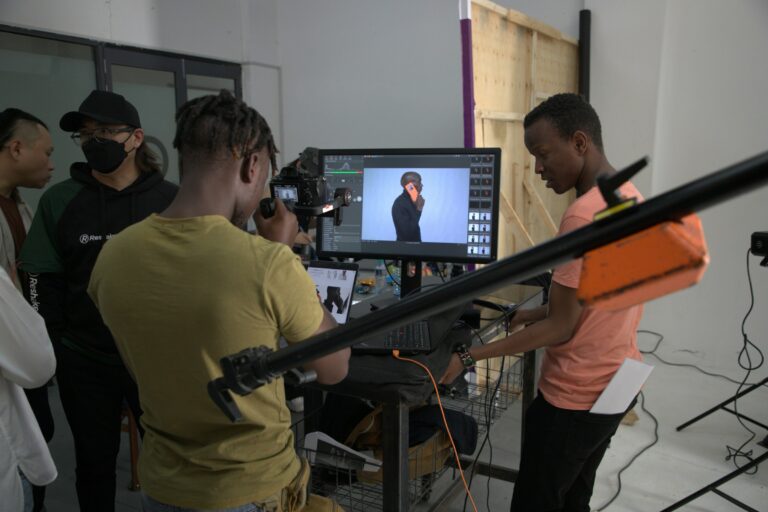
Viewers learn far more from watching your people do the job than from exterior shots of your offices. A logistics firm loading a truck at dawn, an engineer testing a system on site, a customer service team solving a real query: these moments carry credibility that no amount of narration can. Plan the shoot around a handful of genuine activities and give the crew time to film them properly.
Let a few real voices carry the story
Two or three well-prepared interviews usually work better than a long line of managers each saying a sentence. Choose people who speak naturally and can describe something concrete: a project they are proud of, a problem they solved, why they joined. A satisfied client, if they are willing, is often the most persuasive voice in the film. Avoid scripts read to camera; prepare people with questions instead, and let the edit shape their answers.
Keep it short, then make versions
Long profiles rarely get watched to the end. Wyzowl’s Video Marketing Statistics 2026 survey, a small global sample of 266 marketers and consumers, found that 71% of respondents considered videos of between 30 seconds and two minutes the most effective. Treat that as a guide rather than a rule, but for most organisations a main film of around two minutes, with a 30 to 60 second social version and perhaps a longer cut for tender submissions or events, covers the ground well.
Design for the phone first
Many people will first see your profile on a mobile phone, often in a social feed. According to DataReportal’s Digital 2026: Kenya report, Kenya had 23.4 million internet users and 18.4 million social media user identities in late 2025, and LinkedIn reported 6.3 million members in the country. That has practical consequences. Open with something visual rather than a logo animation, keep on-screen text large and readable, add subtitles so the film works with the sound off, and ask for vertical or square versions if you plan to run it on social platforms.
Choose your languages deliberately
English suits most corporate and procurement audiences, but a profile aimed at customers, communities or staff across the country may land better in Kiswahili, or in English with Kiswahili subtitles. Decide this at the start, because it affects who you interview and how the script is written. Our page on Kiswahili voice-over and subtitling explains the options.
Real footage over stock
Generic stock clips of glass towers and smiling strangers undermine a profile’s whole purpose, which is to show that your organisation is real. Viewers in Kenya recognise Nairobi, and they recognise when it is not Nairobi. Film your own people, sites and customers wherever possible, and use stock only for neutral cutaways, if at all.
Staff consent: the step many companies skip
Because a company profile is made in-house with familiar faces, it is easy to assume that employees are happy to appear. Under Kenyan law, that assumption carries risk. Section 37 of the Data Protection Act, 2019 restricts the commercial use of personal data, including a person’s image, without their express consent.
The Office of the Data Protection Commissioner (ODPC) has applied this to employers. In Lawrence Mimpwi Kirima v Solar Panda Company Kenya Limited (ODPC Complaint No. 1618 of 2024), the company used a field sales agent’s photograph in marketing flyers. The ODPC found the employer could not show that consent had been obtained and ordered it to pay the complainant KSh 500,000 US$3,850 in compensation. EY’s commentary on the decision notes that the burden of proving consent sits with the employer, and that consent should be express, specific, informed and properly recorded.
In practice, that means a simple, separate written consent form for everyone identifiable in the film, explaining where the video will be used and for how long. Do the same for clients, contractors and members of the public who appear. Keep the signed forms somewhere you can find them if the video is still online in three years and a former employee asks for it to be removed. This is general information rather than legal advice; your own legal or data protection adviser can tailor it to your circumstances.
US dollar amounts are approximate and update automatically, using a market rate of KSh 129.73 to US$1 (15 October 2026).Planning the shoot
A good profile is mostly won in pre-production. A few points make a noticeable difference:
- Agree the message in one sentence. If the team cannot agree what the film should say, the editor will not be able to fix it later.
- Pick locations for what happens there. A busy workshop or a client site is usually better than a boardroom.
- Schedule around real activity. Ask when the interesting work actually takes place, and book the crew for those hours.
- Prepare interviewees, not scripts. Share the questions in advance and allow time for a relaxed conversation on the day.
- Plan aerials properly. Drone shots of a factory, farm or campus can establish scale quickly, but commercial drone work in Kenya is regulated by the Kenya Civil Aviation Authority. Check that your production partner holds a KCAA Remote Operator Certificate and uses licensed pilots. Our drone videography page explains how we approach aerial work.
- Name one approver. Profiles stall when every department head reviews every cut. Agree who signs off, and how many rounds of revisions are included.
Choosing who makes it
When you approach production companies, ask to see profile or corporate work they have made for organisations similar to yours, and look for films that show people and activity rather than buildings. Ask how they handle consent, music licensing and file delivery, and who will own the raw footage. Our guide to choosing a corporate video production company in Nairobi covers the questions to ask and the warning signs to look out for.
A company profile video is often the first piece of your organisation that a client, partner or recruit will see. Made with a clear audience in mind, real people on screen and consent in place, it can keep working for years. If you are planning one, our corporate video production page explains how we work with organisations across East Africa.
Frequently asked questions
How long should a company profile video be?
For most organisations, a main film of around two minutes works well, supported by a 30 to 60 second version for social media. A longer cut can be useful for tenders or events, but few viewers will watch more than a few minutes online.
Should a company profile video be in English or Kiswahili?
It depends on the audience. English suits most corporate, donor and procurement viewers, while customer-facing or staff-facing films may work better in Kiswahili or with Kiswahili subtitles. Decide early, because it shapes the interviews and the script.
Do employees need to sign consent forms to appear in our profile video?
Yes, it is strongly advisable. Section 37 of Kenya’s Data Protection Act restricts the commercial use of a person’s image without express consent, and the ODPC has ordered an employer to pay compensation for using an employee’s photograph in marketing without proof of consent. Use a separate, signed form for each identifiable person.
Can we include drone footage of our premises?
Yes, if it is planned properly. Commercial drone operations in Kenya are regulated by the Kenya Civil Aviation Authority, so work with a production company that holds a KCAA Remote Operator Certificate and uses licensed pilots, and allow time for any approvals your location requires.
Afrovo Studios is a Nairobi-based video production company working across East Africa, making documentaries, campaign films and corporate video for NGOs, conservation organisations and brands. Get in touch to talk about your next project.