EUDR and Coffee: Telling the Traceability Story on Film
The EUDR applies to coffee from 30 December 2026. What it asks of Kenyan coffee, what low-risk status means, and how to film traceability with care.
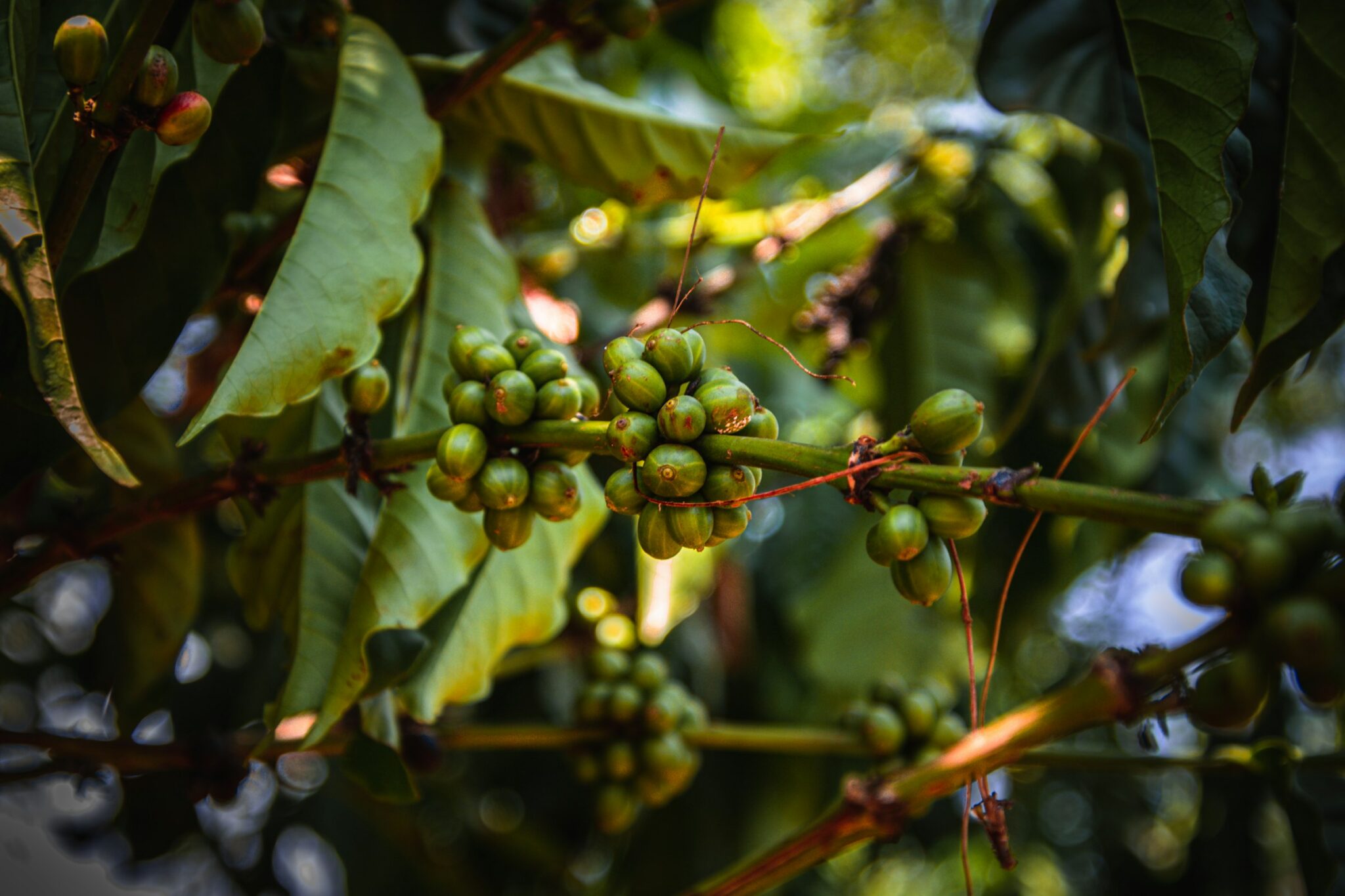
On 30 December 2026 the European Union’s deforestation regulation, usually shortened to EUDR, finally starts to apply to large and medium-sized companies. Coffee is one of the commodities it covers, and the EU is Kenya’s most important coffee market, taking more than half of the country’s exports. For cooperatives, exporters, roasters and the organisations that support them, the next few months are about data: plot maps, records and paperwork that prove where each bag came from.
That work is also a story, and a better one than most compliance projects. It involves farmers, field officers with phones and GPS units, cooperative factories and buyers thousands of kilometres away. This article explains what the EUDR asks of coffee, where Kenya stands, and how to film the traceability story accurately and with care. Every regulatory point below was checked against dated sources in October 2026, listed at the end.
What the EUDR asks of coffee
The regulation (EU) 2023/1115 bars seven commodities, coffee among them, from the EU market unless they are deforestation-free, were produced in line with the laws of the producing country, and are covered by a due diligence statement. “Deforestation-free” means the coffee was not grown on land deforested after 31 December 2020.
The obligations fall on the companies that place coffee on the EU market or export it from there: importers, roasters and traders. In practice, though, the evidence starts at the farm. Operators must collect geolocation data for the plots where the coffee was grown, so they depend on cooperatives, exporters and farmers to supply it.
The timetable has moved twice. The regulation was first due to apply at the end of 2024, then at the end of 2025. A targeted revision agreed in December 2025 set the current dates:
- 30 December 2026 for large and medium-sized operators and traders;
- 30 June 2027 for micro and small operators.
The Commission published its simplification review on 4 May 2026, with updated guidance and FAQs, and confirmed the December 2026 date. In July 2026 it adopted a change to the list of covered products that adds soluble (instant) coffee, applying from 30 December 2027. Green and roasted coffee are already covered.
Where Kenya stands
Under the EU’s country benchmarking, set out in Implementing Regulation (EU) 2025/1093 of 22 May 2025, Kenya is classed as a low-risk country. Only four countries are classed as high risk.
Low risk is helpful, but it is not an exemption. Companies sourcing from a low-risk country can use simplified due diligence, which means they do not have to carry out the full risk assessment and risk mitigation steps unless they learn of a problem. They still have to collect the required information, including the geolocation of the plots, and they still have to submit due diligence statements and keep records. For Kenya’s many smallholders, mapping plots and linking them to each delivery remains the core task.
There is already a proof of concept. In March 2026 the New Kenya Planters Cooperative Union flagged off what was reported as Kenya’s first EUDR-ready coffee consignment: 320 bags of 60 kg, sourced from 13 cooperative societies. The work was supported by the Alliance of Bioversity International and CIAT, the Global Coffee Platform, the Kenya Coffee Platform and German development cooperation. Farms were mapped with the farmers’ consent and checked against public geospatial tools, which found very low to no deforestation risk.
Why traceability is worth putting on film
Most compliance work is invisible. A buyer in Hamburg or Milan sees a due diligence statement, not the field officer walking a farm boundary at seven in the morning. Film closes that gap. Done well, it can:
- reassure buyers that a cooperative or exporter understands the requirements and has a working system, months before the deadline;
- train members, showing farmers why their plot data is being collected and how it will be used, in Kiswahili or a local language;
- support sustainability reporting for roasters and traders who need to show their supply chain work, not just state it;
- give credit to the farmers and field teams doing the hard part.
It also fits the wider shift in how companies report on sustainability, which we covered in our guide to ESG and sustainability video in Kenya.
Stories worth telling
The mapping visit
A field officer, a farmer and a phone. Following one plot from the first conversation to a finished map shows what the regulation actually requires, and why consent matters. It is a simple, human sequence that explains more than any diagram.
The factory and the paper trail
Cherry delivery, weighing, records and lot numbers at the wet mill. Here the challenge is keeping each farmer’s coffee linked to its data as it moves through the factory, the miller and the marketing agent. Good sequences show the system working, not just the equipment.
The landscape
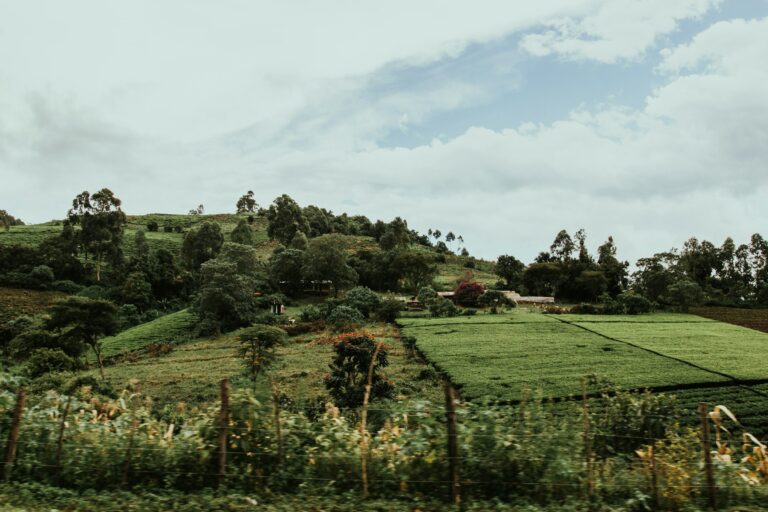
Aerial footage can show farms, shade trees and the forest edge in one frame, which makes the idea of a 2020 cut-off date easy to understand. Any drone work needs Kenya Civil Aviation Authority approval and the landowners’ agreement. Afrovo holds a KCAA Remote Operator Certificate and all our drone pilots are licensed; our drone videography page explains how we plan aerial shoots.
The buyer’s view
A short contribution from a roaster or importer, recorded remotely if need be, explains why the data matters to them. It turns a regulatory requirement into a relationship.
Filming it well
Traceability films carry particular risks. A few principles keep them accurate and fair:
- Protect farmers’ data. Plot coordinates, names and ID details are personal data under Kenya’s Data Protection Act. Do not show them legibly on screen, blur maps and screens where needed, and agree in writing how footage will be used.
- Get informed consent. Explain the purpose of the film and where it will be seen, in a language people understand. Our ethical storytelling policy sets out the standards we work to.
- Do not overclaim. A film should not call coffee “deforestation-free” or “EUDR-compliant” unless the due diligence actually supports it. Describe the work being done and let the documentation make the claim.
- Let farmers speak. The most persuasive voice is a farmer explaining in their own words what mapping means for them. Plan for subtitles or a Kiswahili voice-over so the film works for both members and buyers.
- Film over time. Harvest in the main coffee areas follows the seasons, so plan the shoot around when cherry is actually being picked and delivered.
Timing and formats
With the large-operator deadline at the end of December, the most useful formats now are short and practical: a two to three minute explainer for buyers, a member training film, and a set of short clips for presentations and trade events. A longer documentary piece can follow once the system has run through a full season. If you are a roaster or trader, our corporate video production service covers supply chain and sustainability films across Kenya and East Africa.
Sources
- Council of the EU, “Deforestation: Council signs off targeted revision to simplify and postpone the regulation”, press release, 18 December 2025.
- Latham & Watkins via Global Environmental Law Review, “European Commission releases new EU Deforestation Regulation measures”, 7 May 2026.
- Coolset, “EUDR timeline tracker”, updated 24 September 2026; and “EUDR due diligence for low-risk countries”, updated July 2026.
- StoneX, “EUDR countdown intensifies as European Commission clarifies rules and expands coffee coverage”, 15 July 2026.
- Commission Implementing Regulation (EU) 2025/1093 of 22 May 2025 (country benchmarking), EUR-Lex; People Daily, “Reprieve for farmers as EU ranks Kenya as low-risk in new deforestation rules”, 18 June 2025.
- World Resources Institute, “What is the EU Deforestation Regulation (EUDR)?”, updated 15 May 2026.
- The Star, “Kenya exports first coffee that meets EU anti-deforestation rules”, 24 March 2026; Alliance of Bioversity International and CIAT, “Kenya’s first EUDR-ready coffee shipment”, 10 April 2026.
Frequently asked questions
When does the EUDR apply to coffee?
From 30 December 2026 for large and medium-sized operators and traders, and from 30 June 2027 for micro and small operators. Soluble coffee was added to the scope in 2026 and is covered from 30 December 2027.
Is Kenyan coffee exempt because Kenya is low risk?
No. Kenya is classed as low risk, which allows simplified due diligence, but companies must still collect the required information, including plot geolocation, and submit due diligence statements. They can skip the full risk assessment and mitigation steps unless they learn of a risk.
Can a film show farmers’ plot maps?
It can show the mapping process, but plot coordinates, names and ID details are personal data. They should not be legible on screen, and farmers should give informed, written consent for how the footage will be used.
What kind of video helps with EUDR readiness?
Short, practical films work best before the deadline: a buyer-facing explainer of the traceability system, a member training film in Kiswahili or a local language, and short clips for presentations. A longer documentary can follow after a full season.
Afrovo Studios is a Nairobi-based video production company working across East Africa, making documentaries, campaign films and corporate video for NGOs, conservation organisations and brands. Get in touch to talk about your next project.